We are excited to announce a major enhancement to the delivery exception handling process with the introduction of a new verification step in the “Fail to Deliver” workflow. This improvement ensures greater accuracy, transparency, and accountability across delivery operations, benefiting both staff and merchants.
The newly introduced status — Verify Fail to Deliver — adds a mandatory verification stage before a failed delivery can be moved to return statuses. This update strengthens communication, clarifies operational stages, and prevents premature returns.
What’s New #
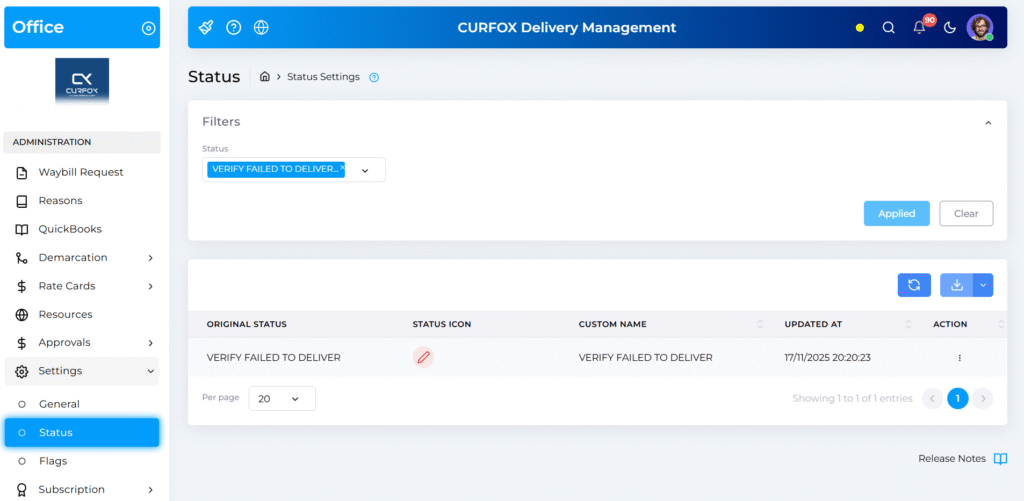
✅ New Order Status: Verify Fail to Deliver #
A new intermediary status has been added to the order workflow.
All orders marked as Failed to Deliver must now pass through the Verify Fail to Deliver stage before proceeding to return-related statuses.
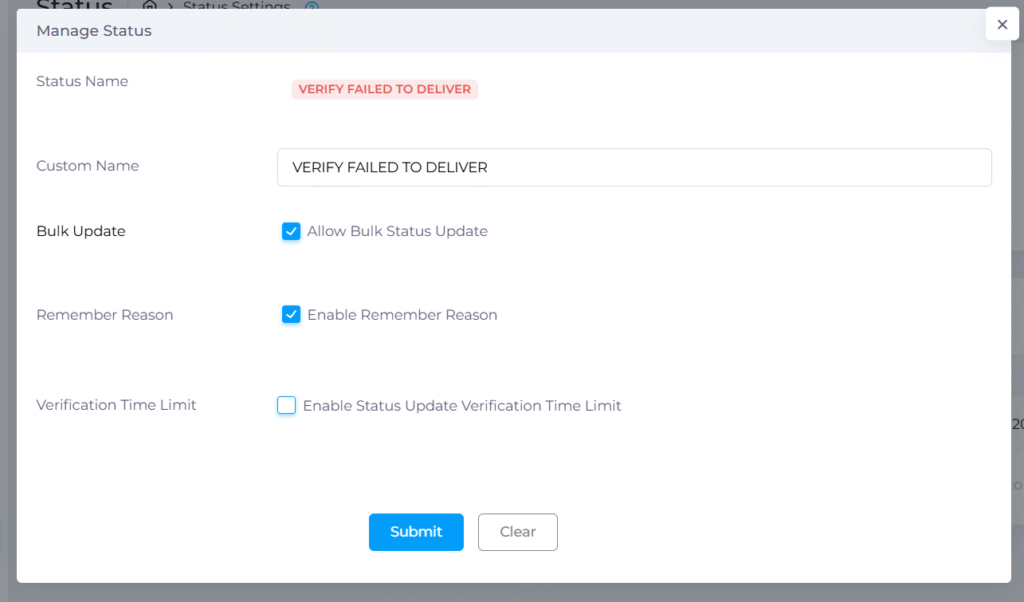
⏱ Verification Time Limit Configuration #
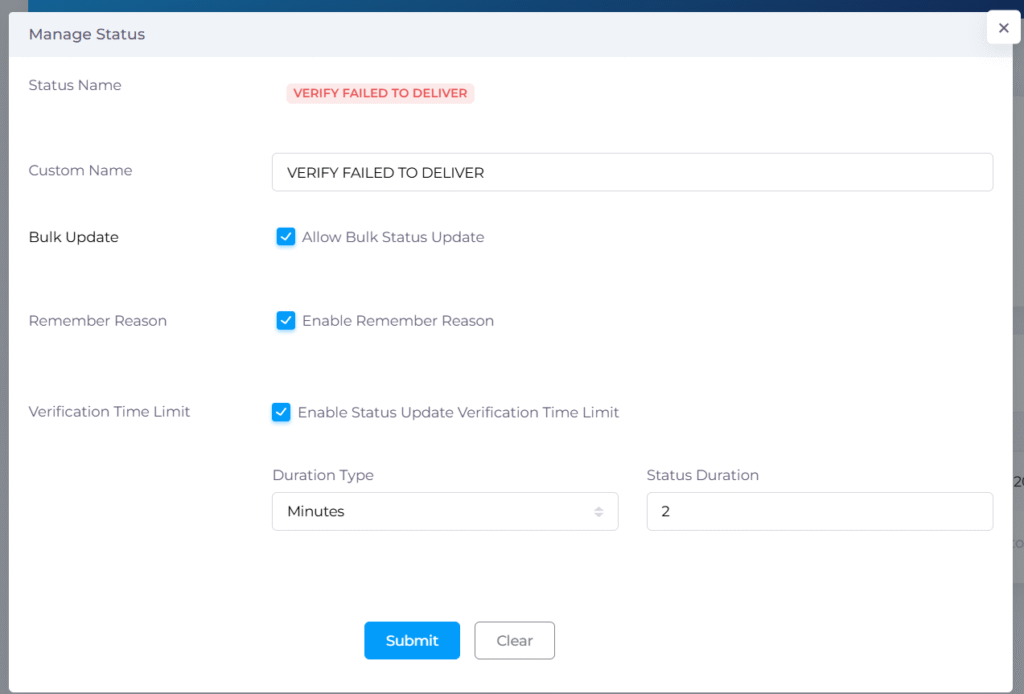
You can now configure a Verification Time Limit (in minutes, hours, or days), during which the order must remain in the verification stage.
- This allows your team time to investigate the delivery failure.
- If no time is configured, staff may move the order forward without a mandatory waiting period.
How It Works #
📝 Previous Workflow (Before Release) #
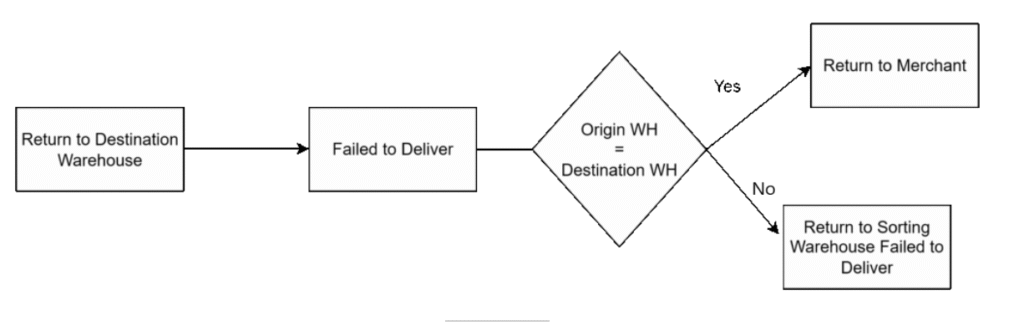
When a delivery attempt failed and the parcel returned to the destination warehouse, staff had two actions:
- Reschedule the order, or
- Mark it as Fail to Deliver, after which it directly proceeded to return handling. (Return to Sorting Warehouse Failed to Deliver)
This sometimes led to gaps in communication or insufficient verification before returning parcels.
📝 New Workflow (After Release) #
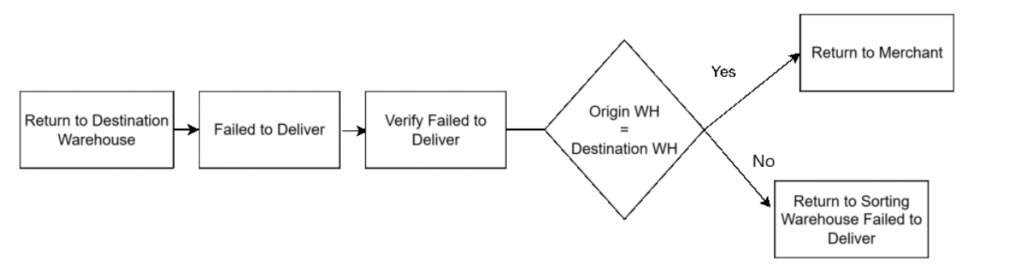
- Failed Delivery Occurs
The rider returns the parcel to the destination warehouse. - Move Failed to deliver Orders to “Verify Fail to Deliver” status Before “Return to Sorting Warehouse Failed to Deliver” Or “Return to Merchant”
Instead of immediately moving to return statuses from failed to deliver status, warehouse staff must now move the order to the new Verify Fail to Deliver status. - Verification Period Begins
The order remains in this stage for the configured verification duration.
During this time, the team can:- Investigate the cause of the failed delivery
- Contact the customer or merchant
- Document the failure reason or supporting details
- Proceed to Next Status
After verification time has passed, staff may move the order to the next appropriate status, such as:- Returned to Sorting Warehouse (Failed to Deliver)
- Return to Merchant
📝 Important Notes #
- Orders cannot skip the verification stage.
- But you can skip setting the verification time period (Not recommended)
- Return-related statuses will only become updateable after the verification period ends.
- Both staff and merchants can see this status and the remaining time, improving visibility across teams.
✍️ Benefits #
✔ Improved Transparency #
Every failed delivery now passes through a clearly visible verification stage, ensuring no steps are missed.
✔ Stronger Client Communication #
The dedicated verification window allows teams to contact clients promptly and potentially resolve issues without initiating returns.
✔ Structured Exception Handling #
The update enforces a more consistent and accountable workflow, reducing errors and improving operational quality.
Conclusion #
The new Verify Fail to Deliver workflow introduces a more reliable and informative process for managing failed deliveries. By ensuring that each case is properly reviewed, this feature enhances customer experience, minimizes unnecessary returns, and provides complete clarity for staff and merchants.


